- Empty cart.
- Continue Shopping

Electronic Prayer Mat for Kids: Teaching Children Namaz with My Salah Mat
- Posted on
 azharmehmood96@gmail
- 0
- Categories: Blog

My six-year-old son asked me last Ramadan, “Abba, when can I pray like you?” My heart swelled with pride, but honestly, I felt overwhelmed. How do you teach a child proper prayer when they can barely sit still for five minutes? Traditional methods felt too complex for his age, and I worried about making prayer seem like a chore rather than a blessing.
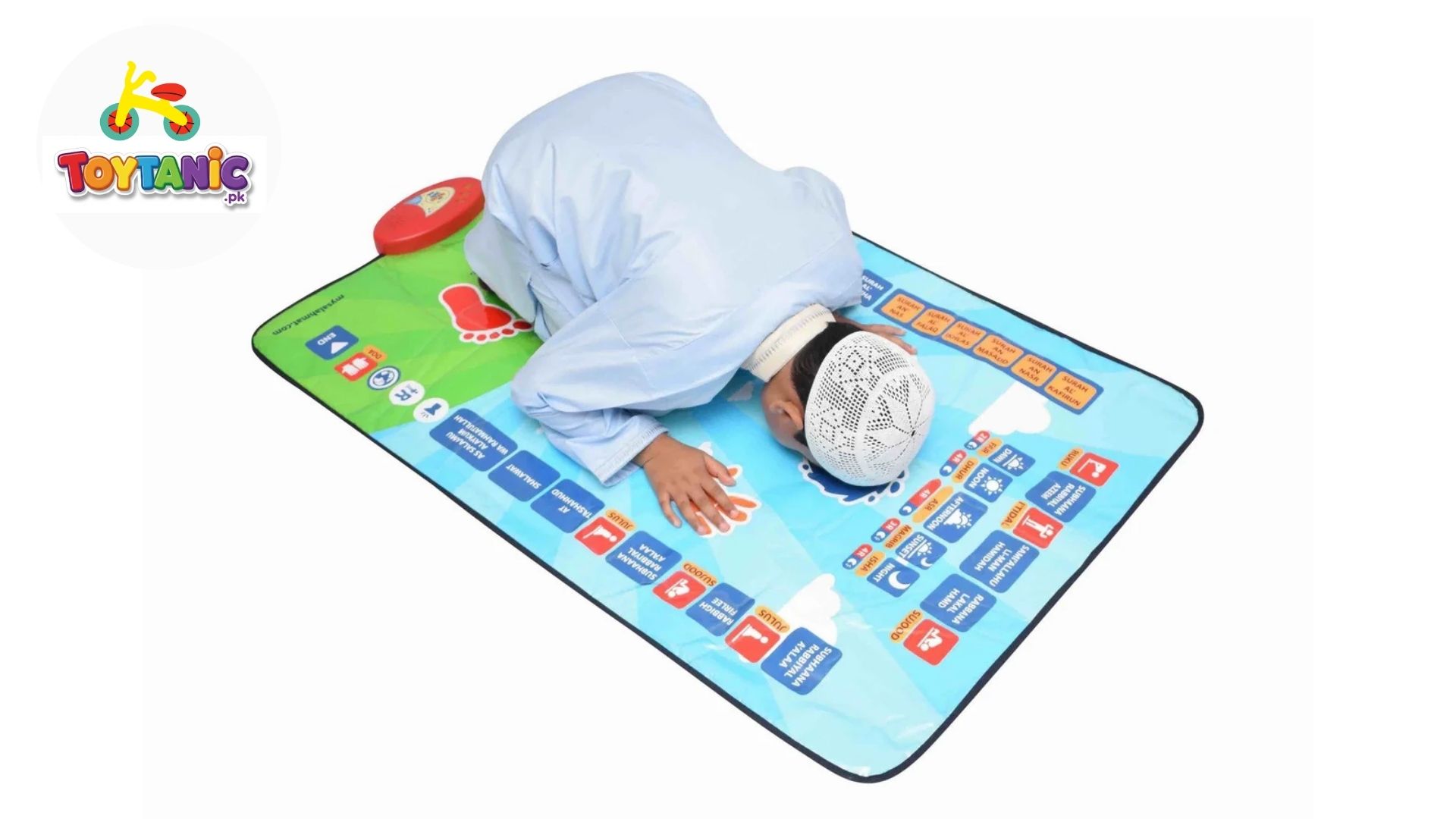
Then I discovered the Electronic Prayer Mat for Kids, also known as My Salah Mat, and everything changed. This isn’t just another toy—it’s a teaching tool that transformed how my children learn namaz. The interactive prayer mat for children uses touch-sensitive technology to guide kids through each prayer step, making learning engaging instead of intimidating. After three weeks of using it, my son can perform basic prayer movements correctly, and more importantly, he’s excited to practice.
Let me share why this innovative mat has become essential in our home and how it might help your family too.
What Makes the Electronic Prayer Mat for Kids Special
Unlike traditional prayer learning methods that rely solely on repetition and correction, My Salah Mat uses interactive technology that children actually understand and enjoy.
Touch-sensitive learning technology: The mat contains 36 touch-sensitive pads strategically placed where feet, knees, hands, and head should be positioned during prayer. When your child stands on the designated foot position, sensors detect the pressure and automatically recite “Allahu Akbar,” followed by Surah Fatiha. As they move through prayer positions—placing knees down for ruku, hands and forehead for sujood—the mat responds with appropriate duas and recitations for each step.
This sensory feedback creates an immediate connection between physical action and spiritual recitation. My daughter, who struggled remembering prayer sequences, now flows through movements confidently because the mat guides her at each stage.
Multilingual support for diverse families: Supporting 15 different languages including Urdu, English, and Arabic, the mat accommodates Pakistan’s diverse linguistic landscape. You can teach children in their most comfortable language, whether they’re Urdu speakers in Lahore, Pashto speakers in Peshawar, or English-speaking expat families.
We started my children on Urdu since that’s our home language, then gradually introduced Arabic as they became comfortable with movements. The flexibility removes language barriers from spiritual education.
Comprehensive prayer coverage: The mat guides users through all five daily prayers—Fajr, Dhuhr, Asr, Maghrib, and Isha—with clear, step-by-step instructions. Children learn not just movements but also the specific duas and recitations for each prayer time.
This comprehensive approach means one tool covers their entire prayer education foundation. No need for multiple resources or complicated explanations.
How the Interactive Learning Works
The genius of the Electronic Prayer Mat for Kids lies in its simplicity combined with effective technology.
When a child begins prayer, they stand on the designated foot markers. The mat’s sensors detect this pressure and initiate the prayer sequence by reciting the opening Takbeer: “Allahu Akbar.” Then it recites Surah Fatiha, teaching proper pronunciation through repetition.
As the child moves into ruku (bowing position), placing hands on the corresponding mat areas, the mat recites the appropriate “Subhana Rabbiyal Azeem.” When they move to sujood (prostration), placing knees, hands, and forehead on marked positions, it recites “Subhana Rabbiyal A’la.”
This continues through all prayer stages—qiyam (standing), ruku (bowing), sujood (prostration), jalsa (sitting), and tashahhud (final sitting). The mat responds to each position change with correct recitations, effectively providing a patient, never-tiring teacher that children can practice with repeatedly without adult supervision.
My son practices three to four times daily now—not because I force him, but because the interactive nature makes it feel like a game with spiritual purpose.
Durability Features Parents Appreciate
Children aren’t gentle with their belongings. Any parent knows this truth. The Electronic Prayer Mat for Kids addresses this reality with thoughtful design features.
Waterproof material: Spills happen. Juice boxes leak. Water bottles tip over. The mat’s waterproof construction means these inevitable accidents don’t destroy the electronics inside. Simply wipe it clean and continue using it. I’ve cleaned ours multiple times after my daughter spilled water during wudu preparation.
This waterproof quality also means you can actually use it in the bathroom area where children perform ablution, without worrying about damage from splashes.
Fire-resistant material: Safety concerns parents constantly. Knowing the mat uses fire-resistant materials provides peace of mind. While we obviously don’t expose it to flames, the added safety layer matters when electronics and children combine.
Easy maintenance: The smooth surface wipes clean easily with a damp cloth. No special cleaning products required. After months of daily use, our mat looks nearly new because cleaning takes just seconds.
Age-Appropriate Prayer Education
Different ages benefit from the Electronic Prayer Mat for Kids differently, but it works across a surprisingly wide age range.
Ages 4-6: Young children focus primarily on learning prayer movements and positions. They may not understand all the Arabic recitations yet, but physical muscle memory develops. My four-year-old nephew uses it mainly for movement practice, and his coordination has improved noticeably.
Ages 7-10: This age group grasps both movements and meanings. They start understanding what they’re reciting and why. The mat reinforces both aspects simultaneously—correct physical positioning plus accurate verbal recitations.
Ages 11+: Pre-teens and teens who never learned proper prayer benefit enormously. The mat removes embarrassment of asking basic questions or admitting gaps in knowledge. They can practice privately until confident.
Even adults sometimes use our mat for refreshing their knowledge or learning prayers they never properly mastered.
Comparing Traditional and Interactive Learning
I learned prayer through traditional methods—watching adults, repeating after my father, gradual correction over years. That approach worked, but it had limitations.
Traditional method challenges:
- Requires consistent adult availability and patience
- Children fear making mistakes in front of others
- Hard to practice independently
- Difficult to track progress
- Can feel overwhelming with too much correction
Electronic Prayer Mat for Kids advantages:
- Available 24/7 for practice whenever child wants
- Private learning without performance anxiety
- Encourages repetition through engaging interaction
- Immediate feedback on positioning
- Makes learning feel fun rather than burdensome
I’m not saying traditional methods are obsolete. We combine both approaches. The mat provides structure and consistency, while I add context, answer questions, and explain the spiritual significance beyond mechanics.
Real Results from Pakistani Families
Since getting our mat, I’ve recommended it to at least a dozen families. The feedback has been overwhelmingly positive.
My neighbor’s daughter, who resisted prayer learning for months, now asks her mother daily if she can “play on the prayer mat.” That shift in attitude alone justifies the investment.
My cousin in Karachi uses it with his three children simultaneously. They take turns, compete on who can complete prayers most accurately, and have transformed prayer time from daily struggle into anticipated activity.
A friend whose children attend English-medium school uses the English language setting, then gradually introduces Arabic. Her kids now understand what they’re saying during prayer instead of just memorizing sounds.
Addressing Common Concerns
Parents considering the Electronic Prayer Mat for Kids often have similar questions. Let me address the main ones.
“Will it replace parents teaching prayer?” No. The mat is a tool, not a replacement for parental involvement. We still pray together as a family, discuss why we pray, and explain spiritual concepts. The mat handles the technical repetitive teaching, freeing parents to focus on meaning and connection.
“Is it suitable for girls wearing hijab?” Absolutely. The mat responds to pressure, not visual recognition. Whether children wear regular clothes, Islamic dress, or anything else doesn’t affect functionality.
“What if it breaks? Are repairs available?” The durable construction means breakage is unlikely with normal use. However, warranty and customer support details should be confirmed when purchasing.
“Does it require batteries or charging?” Check specific product details, as power sources vary by model. Some use batteries while others may have rechargeable options.
“Can multiple children use it?” Yes! Our two children share one mat without any issues. Just ensure they take turns respectfully.
Integration with Islamic Education
The Electronic Prayer Mat for Kids works best as part of comprehensive Islamic education, not in isolation.
We use it alongside:
- Quran learning apps for memorization
- Islamic story books explaining why we pray
- Family prayer time for social learning
- Mosque classes for community connection
- Conversations about faith and spirituality
The mat handles mechanical prayer learning exceptionally well, allowing us to spend more time on deeper concepts when teaching our children.
Investment Worth Making
Quality Islamic educational tools for children are worth every rupee spent. The Electronic Prayer Mat for Kids represents an investment in your child’s spiritual foundation.
When considering the prayer mat price in Pakistan, it’s important to look beyond the initial cost. Traditional prayer mats cost anywhere from 500 to 2,000 rupees and provide only a clean surface for prayer. The My Salah Mat interactive electronic prayer mat is available at Toytanic for 4,999 rupees—yes, it’s significantly more than a basic mat, but the educational value it provides is incomparable.
Consider the value you’re receiving for 4,999 rupees:
- A patient teacher available anytime
- Proper prayer technique from the start
- 15 language options for diverse learning
- Coverage of all 5 daily prayers with proper recitations
- Positive associations with worship
- Independence in religious practice
- Skills lasting a lifetime
- Educational tool usable by multiple children
When I calculate cost per use over years of daily practice, the value becomes clear. My children have used our mat daily for over six months—that’s roughly 27 rupees per day of educational value, and it will continue serving us for years to come. Compare that to hiring a tutor or enrolling in separate Islamic classes, and the mat practically pays for itself.
Where Islamic Technology Meets Tradition
Some relatives initially questioned whether an electronic mat is “too modern” for teaching prayer. I understand that hesitation.
But technology is neutral—it’s a tool. The Quran was transmitted orally, then written, then printed, then digitized. Each advancement made preservation and learning easier. The Electronic Prayer Mat for Kids is simply the next step in making Islamic education accessible and effective.
It doesn’t replace tradition. It enhances tradition by using modern tools to achieve timeless goals—teaching children to worship correctly and developing their connection with Allah.
The Bottom Line
Teaching children prayer is one of our most important parental responsibilities. The Electronic Prayer Mat for Kids makes this crucial duty easier, more effective, and more enjoyable for both parents and children.
My son who asked about praying “like Abba” now performs wudu independently, rolls out his mat, and completes basic prayers with minimal help. He’s seven years old. That progress happened in months, not years, because the interactive mat made learning engaging instead of intimidating.
If you’re struggling to teach children namaz, feeling overwhelmed by the complexity, or just want better tools to support their Islamic education, consider this innovative mat. It won’t do the parenting for you, but it will make your job significantly easier.
Our children are growing up in a digital age. Using technology that teaches them to disconnect from screens and connect with their Creator? That’s not just smart—it’s essential.
References:
- Islamic Education Foundation. “Teaching Children Prayer.“
- Pakistan Council of Islamic Ideology. “Islamic Education Guidelines.“
- International Islamic University. “Early Islamic Education Best Practices.“
- Ministry of Religious Affairs, Pakistan. “Islamic Learning Resources.“