
- Empty cart.
- Continue Shopping

Magnetic Building Sticks and Puzzle Toys and Brain Development
- Posted on
 azharmehmood96@gmail
- 1
- Categories: Blog

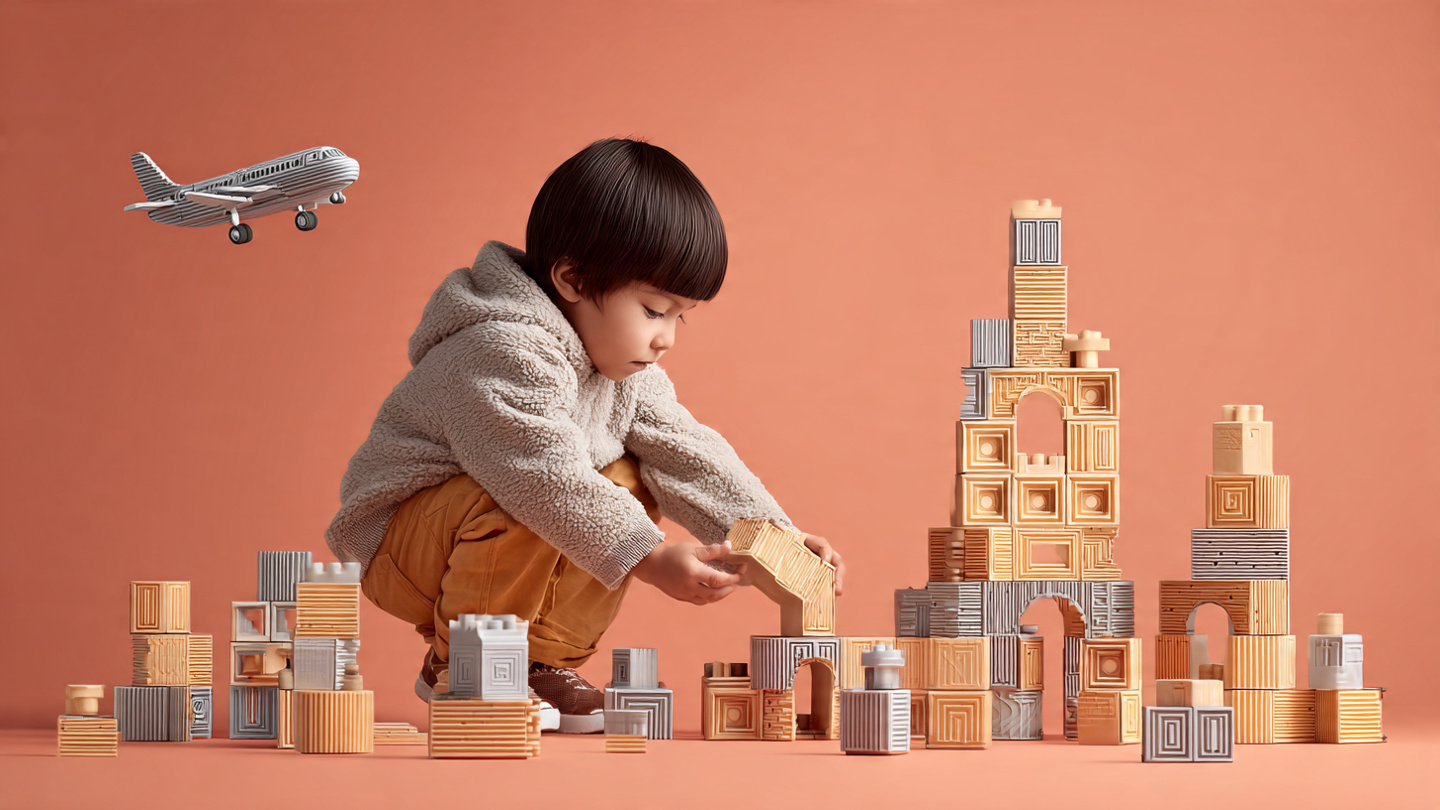
My nephew Essa turned four last month, and like most kids his age, he’s bursting with energy and curiosity. His attention span? About as long as a goldfish’s. That is, until his grandmother surprised him with a set of magnetic building sticks and some wooden puzzles.
I watched something remarkable happen. This kid who couldn’t sit still for five minutes spent nearly an hour building towers, connecting magnetic pieces, and figuring out puzzle solutions. He wasn’t just playing—his little brain was firing on all cylinders, making connections, solving problems, and learning without even realizing it.
That’s when it hit me. These aren’t just toys. They’re secret weapons for brain development disguised as fun.
Why Your Kid’s Brain Loves Hands-On Play
Here’s the thing about children’s brains—they’re basically sponges, but not the kind that just soak up information passively. They need to squeeze, manipulate, and play with concepts to really absorb them. That’s where toys like magnetic building sticks and puzzle toys come into the picture.
Think about it. When your child picks up a puzzle piece, their brain isn’t just thinking “where does this go?” It’s processing shapes, colors, spatial relationships, and cause-and-effect all at once. Add magnets to the mix, and you’ve got that satisfying click when pieces connect—instant feedback that their brain absolutely loves.
Dr. Maria Montessori figured this out over a century ago. She understood that children learn best through hands-on experiences, not lectures or flashcards. Modern neuroscience has caught up and proven her right. When kids manipulate physical objects, they’re building neural pathways that screen time simply can’t replicate.
The Magic Behind Magnetic Building Toys
Let’s talk about those magnetic building sticks for a minute. They’re deceptively simple—just sticks and balls that click together magnetically. But watch a child play with them, and you’ll see pure engineering genius in action.
The magnetic connection does something special. Unlike regular blocks that just stack, magnets teach kids about invisible forces. They feel the pull, the resistance, the snap when pieces align correctly. This tangible feedback helps them understand abstract concepts like polarity and attraction—physics lessons before they even know what physics is.
My friend Sarah’s six-year-old built an entire “rocket ship” last week using magnetic sticks. She wasn’t following instructions. She was experimenting, failing, adjusting, and succeeding. That’s the scientific method in action, folks. No textbook required.
The beauty of magnetic building sticks and puzzle toys lies in their open-ended nature. There’s no single “right” way to play. A child might build a cube today and a bridge tomorrow. This flexibility exercises different parts of the brain, keeping play fresh and challenging.
Puzzles: The Ultimate Brain Workout
Now, puzzles might seem old-school compared to flashy electronic toys, but they’re absolute powerhouses for cognitive development. And I’m not just talking about those 24-piece cardboard jigsaws.
Wooden puzzles, shape sorters, tangrams, 3D puzzles—they all work different mental muscles. When Jake picks up that puzzle piece and rotates it, trying different angles, he’s developing spatial reasoning. When he remembers where the blue piece goes because it has a curved edge, that’s memory in action. When he figures out the corner pieces go first, he’s learning strategy.
The frustration tolerance piece is huge too. We live in an instant gratification world. Apps reward kids immediately. Food comes fast. Entertainment is on-demand. But puzzles? They make you work for it. And that’s exactly what developing brains need.
I’ve seen kids nearly give up on difficult puzzles, only to push through and experience that “aha!” moment when everything clicks. That persistence builds resilience. It teaches them that struggle leads to success—a lesson worth more than any A+ on a test.
What’s Actually Happening in Their Brains
Let’s get a bit nerdy for a second. When children play with magnetic building sticks and puzzle toys, several brain regions light up simultaneously.
The prefrontal cortex—that’s the planning and decision-making center—activates when kids figure out how to build a stable structure or where a puzzle piece might fit. They’re making executive decisions, even if those decisions are about whether the red stick or blue stick works better.
The parietal lobe handles spatial awareness. Every time your child rotates a puzzle piece or visualizes how magnetic sticks will connect, this area gets a workout. That’s why kids who play with building toys often excel at reading maps, understanding geometry, and even parking cars when they’re older (seriously, there’s research on this).
The visual cortex processes all those shapes, colors, and patterns. The motor cortex controls those little fingers as they manipulate pieces. And here’s the cool part—these areas work together, creating and strengthening neural connections that become the foundation for more complex learning later.
According to research from the American Academy of Pediatrics, this kind of active, hands-on play is crucial during early childhood when brain development happens at lightning speed. We’re talking about a million neural connections forming every single second in the first few years of life.
Real Skills for the Real World
Okay, but what does all this brain development actually mean for your kid’s future? Fair question.
Problem-solving becomes second nature. Kids who regularly work with building toys and puzzles develop a “figure it out” mentality. When they hit obstacles in school or life, they don’t immediately give up or ask for help. They try different approaches first.
Math suddenly makes sense. Geometry isn’t some abstract torture when you’ve spent years manipulating 3D shapes. Fractions click faster when you’ve physically divided puzzle pieces into sections. Patterns feel natural because you’ve been creating them since you were three.
Creativity gets a genuine boost. Unlike toys that do one thing one way, building sticks and puzzles encourage experimentation. There’s no instruction manual for imagination. Kids learn to think outside the box because the box keeps changing shape.
Focus and concentration improve dramatically. In our attention-deficit world, the ability to focus deeply on a single task is becoming a superpower. Regular puzzle and building play strengthens this mental muscle naturally.
My neighbor’s daughter started with simple puzzles at age two. Now at seven, she can concentrate on complex builds for over an hour—rare for her age. Her teacher mentioned she’s one of the few kids who can work independently without constant redirection. Coincidence? I don’t think so.
Age-Appropriate Choices Matter
Not all magnetic building sticks and puzzle toys work for every age. Match the challenge to your child’s developmental stage, or you’ll end up with frustrated kids and abandoned toys.
Toddlers (18 months to 3 years) need chunky pieces they can grip easily. Large wooden puzzles with knobs, oversized magnetic pieces, simple shape sorters—these build confidence and basic skills without overwhelming little hands and developing brains.
Preschoolers (3 to 5 years) are ready for more complexity. Puzzles with 12-24 pieces, magnetic building sets with 20-30 pieces, simple pattern-following challenges—these push them just enough to grow without causing meltdowns.
Early elementary (5 to 8 years) can handle significantly more sophisticated challenges. Complex puzzles, large magnetic building sets, 3D puzzle challenges, following instruction guides while also free-building—this age soaks up complexity like crazy.
Older kids (8+) benefit from advanced building systems, intricate puzzles, mechanical challenges, and combination toys that merge different play types. They’re ready for projects that take multiple sessions to complete.
The sweet spot is always just slightly beyond what they can easily do. Too easy breeds boredom. Too hard creates frustration. That “just right” challenge zone is where real learning happens.
The Social Side Nobody Talks About
Here’s something that surprised me: these toys aren’t just solo activities. They’re actually incredible social tools.
When kids build together with magnetic sticks, they negotiate. “I want to use the blue pieces.” “But I need them for my tower!” Conflict resolution in real-time. They compromise, take turns, combine ideas, and create something neither could build alone.
Puzzle collaboration teaches patience. One child might excel at finding edge pieces while another spots color patterns. Working together, they finish faster and learn that different strengths combine into success.
Jake and his sister barely played together before those magnetic building sticks arrived. Now they spend hours creating elaborate structures, arguing about design choices, and ultimately producing things that genuinely impress me. Their communication has improved. So has their ability to handle disagreement without tears.
Even when kids play alone, they’re often performing for an audience or explaining their creations to anyone who’ll listen. That verbal expression—describing what they’ve built, explaining their puzzle strategy—develops language skills in authentic, meaningful ways.
Screen Time vs. Stick Time
Look, I’m not anti-technology. My kids watch shows and play educational apps. But there’s something fundamentally different about physical play with magnetic building sticks and puzzle toys that screens can’t replicate.
Screens are two-dimensional. No matter how interactive the app, it lacks the tactile, spatial, and physical feedback of real-world objects. Your brain processes digital images differently than physical objects you can touch, rotate, and manipulate.
The instant gratification of apps also changes how kids approach challenges. Games are designed to keep you hooked with constant rewards. Real puzzles make you work with no guarantees of success. That delayed gratification builds character and resilience that’ll serve them throughout life.
There’s also the focus factor. Apps constantly interrupt themselves with notifications, rewards, and new stimuli. Building and puzzle play creates a focused, almost meditative state called “flow.” In flow, kids are completely absorbed, losing track of time. That deep concentration is becoming increasingly rare and valuable.
I’m not saying ditch the tablets entirely. Balance matters. But if I had to choose which activity better develops young brains, hands-on play with physical toys wins every single time.
Making the Most of These Toys
Just buying magnetic building sticks and puzzle toys isn’t enough. How you introduce and support their use matters.
Create a dedicated space. A corner of a room with good lighting and easy access to toys makes independent play more likely. Jake’s grandmother set up a small table with organized storage. Game changer.
Play alongside them sometimes. Not to direct or control, but to model problem-solving. When you struggle with a puzzle in front of your child, they see that adults don’t know everything immediately either. They learn that thinking takes time.
Ask open-ended questions. Instead of “Are you building a house?” try “Tell me about what you’re making.” Instead of “Where does this puzzle piece go?” try “What have you tried so far?” You’re teaching them to think, not just respond.
Let them struggle a bit. This is hard for parents. We want to fix problems and prevent frustration. But rushing in too quickly robs kids of the satisfaction of figuring things out independently. Give them time to work through challenges.
Celebrate effort, not just results. “You worked really hard on that puzzle” beats “You’re so smart” every time. The first builds resilience. The second creates pressure to always succeed without effort.
Rotate toys periodically. Even great toys get stale. Put some away for a month. When they reappear, they’ll feel fresh and exciting again.
Investment Worth Making
Quality magnetic building sticks and puzzle toys aren’t the cheapest options in the toy store. But here’s the thing—they last forever and stay relevant for years.
That puzzle set you buy for your three-year-old? Your six-year-old will still find it challenging. Those magnetic building sticks? They grow with your child from simple stacking to architectural masterpieces. They’re multi-child, multi-year investments that keep delivering value long after flashy electronic toys land in donation boxes.
Plus, there’s the resale value. Well-maintained building and puzzle toys hold their worth. I’ve seen used magnetic building sets selling for nearly full price because parents know they’re worth it.
But the real return on investment isn’t monetary. It’s watching your child’s face light up when they solve a tough puzzle independently. It’s hearing them explain the “engineering” behind their magnetic creation. It’s knowing you’ve given them tools that actually build better brains.
The Bottom Line
Magnetic building sticks and puzzle toys aren’t just keeping your kids busy—though let’s be honest, that’s a legitimate benefit. They’re actively shaping how your children think, learn, and approach challenges.
In a world increasingly dominated by passive entertainment and instant gratification, these toys teach patience, persistence, and problem-solving. They build spatial reasoning, mathematical thinking, and creative confidence. They exercise developing brains in ways that will pay dividends for decades.
Jake’s still playing with those toys his grandmother gave him. His attention span has noticeably improved. So has his frustration tolerance and creative thinking. His kindergarten teacher mentioned he’s advanced in spatial reasoning and problem-solving compared to his peers.
That’s the power of the right toys at the right time. Not fancy. Not electronic. Just simple, smart design that works with how children’s brains naturally develop.
So the next time you’re tempted by the latest flashy, beeping, battery-powered gadget, consider grabbing some magnetic building sticks or a challenging puzzle instead. Your child’s developing brain will thank you.
And who knows? You might find yourself sneaking in some building time after bedtime. Don’t judge me—those magnetic sticks are genuinely addictive.
References:
- American Academy of Pediatrics (AAP). [1] “The Power of Play: A Pediatric Role in Enhancing Development.”
- National Association for the Education of Young Children (NAEYC). [2] “Learning Through Play.”
- Zero to Three. [3] “Brain Development and Early Learning.”
- Harvard University Center on the Developing Child. [4] “Brain Architecture.”






Yo, just checked out tayaph and it’s legit. Good vibes all around. Peep it here: tayaph