- Empty cart.
- Continue Shopping


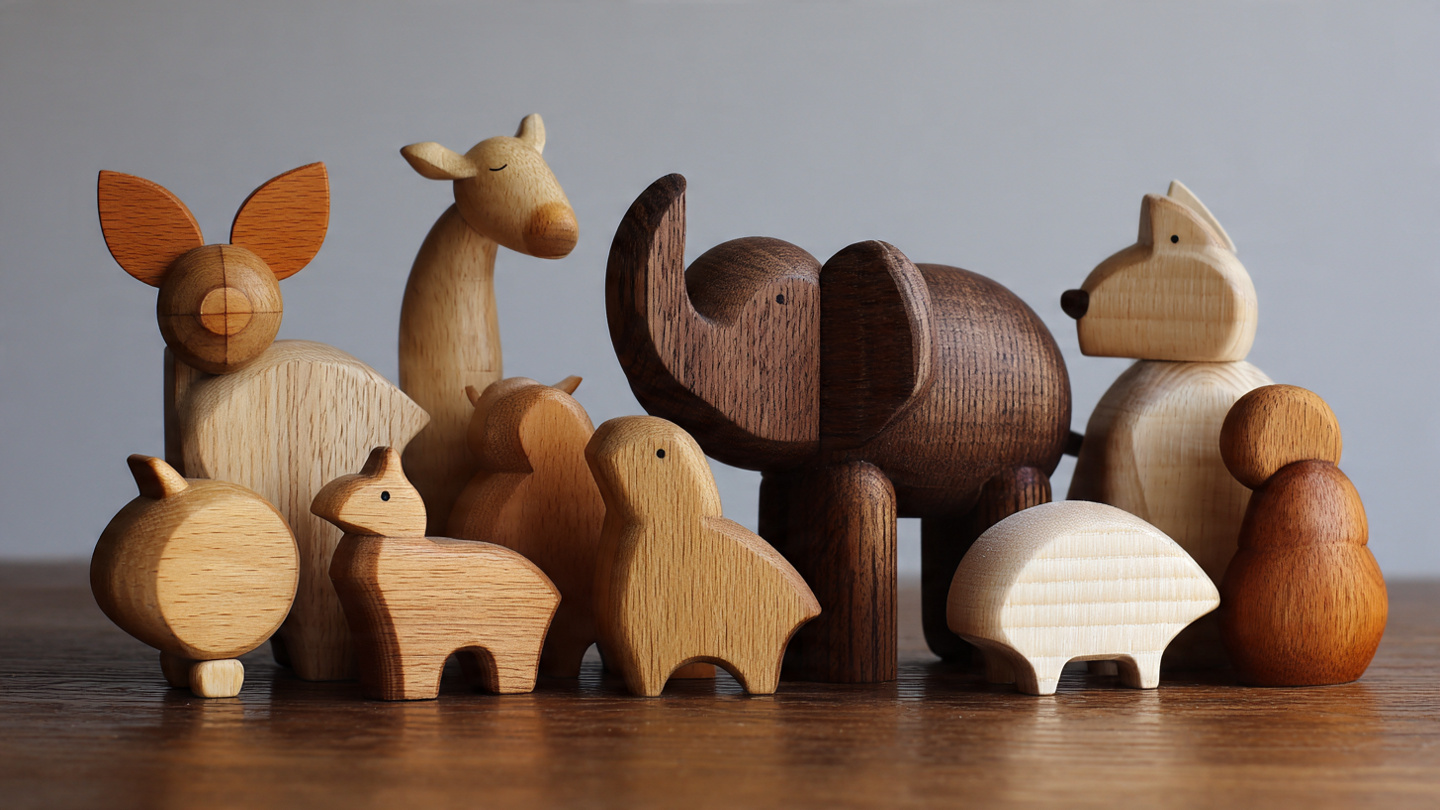
Last Christmas, I watched my two-year-old daughter unwrap a brightly colored plastic toy that blinked, beeped, and sang at ear-splitting volume. Within twenty minutes, she abandoned it. Then she discovered the simple wooden puzzle her grandmother had wrapped—a classic toy with chunky pieces and smooth edges. She played with it for over an hour.
That moment crystallized something I’d been noticing: despite our home being filled with modern plastic toys, my children consistently returned to their wooden ones. The wooden blocks, the simple puzzles, the pull-along duck—these were the toys that truly engaged them.
This observation sent me down a research rabbit hole about why wooden toys for kids have endured for generations while plastic alternatives come and go. What I discovered surprised me and completely changed how I approach toy purchases.
The Wooden Toy Renaissance
We’re witnessing a remarkable shift back to wooden toys. Parents increasingly question the safety of plastics, worry about screen time, and seek sustainable alternatives to disposable consumer culture. According to market research, the global wooden toys market is experiencing significant growth as families prioritize quality over quantity.
But this isn’t just a trend driven by nostalgia or aesthetic preferences. Science backs up what many parents instinctively feel—wooden toys offer genuine developmental, safety, and environmental advantages that plastic simply cannot match.
Safety First: Why Wood Wins

When it comes to children’s safety, wooden toys for kids provide several distinct advantages over plastic alternatives.
Non-Toxic Materials
High-quality wooden toys are made from natural materials without the chemical additives that concern many parents. Unlike plastic toys, which may contain:
- BPA (Bisphenol A): A hormone-disrupting chemical found in many plastics
- Phthalates: Softening agents linked to developmental issues
- PVC: Contains chlorine and may release harmful chemicals
- Lead in paint: Still found in some imported plastic toys
Quality wooden toys use natural, untreated wood or non-toxic, water-based finishes. When babies inevitably mouth their toys (and they will), you don’t worry about chemical exposure.
The Consumer Product Safety Commission (CPSC) maintains strict standards, but wooden toys inherently avoid many chemical concerns altogether. Natural wood doesn’t off-gas volatile organic compounds (VOCs) the way some plastics do, creating healthier play environments.
Durability Means Safety
Broken toys pose serious safety hazards—sharp edges, small parts that detach, and pieces that crack into dangerous shards. Wooden toys’ exceptional durability translates directly into safety benefits.
I’ve watched plastic toys break within days, creating choking hazards and sharp edges. Meanwhile, wooden blocks my children inherited from their cousin show wear but remain completely intact after five years of heavy use. This durability means:
- Fewer sharp edges from cracks and breaks
- Parts that don’t snap off and become choking hazards
- Structural integrity that withstands rough play
- Longevity that eliminates frequent replacements
No Small Batteries
Many plastic electronic toys require button batteries—small, shiny objects that look like candy to toddlers. These batteries are extremely dangerous if swallowed, causing severe internal burns within hours.
Wooden toys eliminate this risk entirely. No batteries, no electrical components, no danger. Simple, human-powered play keeps children safe while developing their imagination.
Weight and Stability
Wooden toys have satisfying heft that plastic lacks. This weight provides several safety advantages:
- Stacking toys are more stable and less likely to topple unexpectedly
- Toys stay where placed instead of sliding around
- Children develop better proprioceptive awareness (understanding of their body in space)
- The substantial feel discourages throwing
Developmental Benefits That Matter

Beyond safety, wooden toys support child development in ways plastic alternatives often cannot.
Sensory-Rich Experiences
The natural texture, weight, and warmth of wood provide richer sensory experiences than smooth plastic. Children learn through their senses, and wooden toys engage multiple senses simultaneously:
Touch: Wood’s varied textures and natural warmth feel different from cold, uniform plastic Sight: Natural grain patterns and subtle color variations provide visual interest Sound: Wooden blocks make satisfying clicks when stacked, unlike hollow plastic sounds Smell: Natural wood has a pleasant, subtle scent that creates sensory memories
My occupational therapist friend explains that these sensory differences aren’t trivial—they’re fundamental to how young children process and understand their world.
Open-Ended Creativity
Simple wooden toys encourage imagination in ways pre-programmed plastic toys cannot. A wooden block isn’t just a block—it’s a phone, a car, a building, whatever a child imagines.
Electronic toys often dictate how children should play. Press this button, hear that sound, watch this light. They’re designed for passive consumption rather than active creation. Wooden toys do the opposite—they’re blank canvases for creativity.
Wooden puzzle boards perfectly demonstrate this principle. Unlike electronic “learning” toys that beep when pieces are placed correctly, wooden puzzles require children to use their own problem-solving skills. They develop spatial reasoning, hand-eye coordination, and persistence—all without batteries or screens.
Mathematical and Scientific Foundations
Wooden toys naturally introduce STEM concepts through play. Building blocks teach:
- Geometry: Shapes, angles, and spatial relationships
- Physics: Balance, gravity, and structural stability
- Mathematics: Counting, patterns, and measurement
- Engineering: How structures are built and why they stand or fall
Wooden abacus blocks introduce mathematical thinking through tactile manipulation. Children learn to count, add, subtract, and understand number relationships by physically moving beads—a concrete foundation for abstract mathematical concepts. Research from the National Association for the Education of Young Children (NAEYC) confirms that hands-on manipulation of physical objects significantly enhances mathematical understanding in early childhood.
Fine Motor Skill Development
Wooden toys’ weight and texture require more deliberate manipulation than lightweight plastic. This resistance strengthens small hand muscles essential for writing, buttoning, and countless daily tasks.
Watch a toddler grasp a wooden puzzle piece versus a thin plastic one. The wooden piece requires a proper pincer grasp, developing the exact muscles needed for pencil control. These small differences accumulate into significant developmental advantages.
Focus and Concentration
Without flashing lights and electronic sounds competing for attention, wooden toys encourage sustained focus. My children play with wooden toys longer and more deeply than with battery-operated alternatives.
This isn’t coincidence. Dr. Dimitri Christakis’s research at Seattle Children’s Hospital found that electronic toys can actually decrease the quality of language interaction between parents and children, while simple toys encourage conversation and engagement.
Environmental Responsibility We Can’t Ignore

Choosing wooden toys isn’t just about our own children—it’s about the world they’ll inherit.
Renewable Resource
Responsibly sourced wood comes from managed forests where trees are replanted. Unlike petroleum-based plastics, wood is genuinely renewable when harvested sustainably. Look for toys certified by:
- FSC (Forest Stewardship Council): Ensures responsible forest management
- PEFC (Programme for the Endorsement of Forest Certification): International forest certification
- Sustainable forestry certifications: Verify environmental responsibility
Biodegradable and Compostable
When a wooden toy finally reaches the end of its long life (often decades), it biodegrades naturally. Plastic toys, by contrast, persist for centuries in landfills, breaking into microplastics that contaminate soil and water.
I think about the plastic toys from my own childhood still sitting in landfills, versus my grandfather’s wooden train set that my children now enjoy. That perspective shift is powerful.
Lower Carbon Footprint
According to the Environmental Protection Agency (EPA), manufacturing wooden toys typically produces lower carbon emissions than plastic toy production. Wood processing requires less energy than petroleum extraction, refining, and plastic manufacturing.
Additionally, wooden toys’ durability means fewer replacements and less waste—a multiplying environmental benefit over years.
Supporting Ethical Manufacturing
Many wooden toy manufacturers are small-scale operations with transparent supply chains and ethical labor practices. By choosing wooden toys, you often support:
- Fair wages and safe working conditions
- Local artisans and small businesses
- Traditional craftsmanship preservation
- Community-based economies
Quality Over Quantity: The Economic Argument

Wooden toys cost more upfront—there’s no denying it. But cost-per-use tells a different story.
Long-Term Investment
A set of quality wooden blocks might cost three times more than plastic alternatives. But:
- They’ll last through multiple children
- They retain resale value
- They require no battery replacements
- They won’t need replacement after breaking
I calculated that our wooden block set, used daily for four years across two children, costs about two cents per play session. Those cheap plastic toys that broke within months? Far more expensive in the long run.
Heirloom Quality
Wooden toys become family heirlooms. My children play with toys my husband used forty years ago—try that with 1980s plastic toys! This generational longevity transforms toys from disposable items into cherished family treasures.
Higher Resale Value
Quality wooden toys maintain value in second-hand markets. When children outgrow them, you can recoup significant costs through resale—something rarely possible with used plastic toys.
Addressing Common Concerns
“Won’t wooden toys splinter?”
Quality wooden toys are sanded smooth and finished properly. I’ve never encountered a splinter from a reputable wooden toy. In contrast, I’ve dealt with countless sharp edges from broken plastic toys.
“Aren’t wooden toys boring?”
This concern usually comes from adults accustomed to electronic stimulation. Children disagree. Watch kids play—they create elaborate scenarios with simple wooden toys that pre-programmed electronics never inspire.
“What about cleaning and hygiene?”
Wooden toys clean easily with mild soap and water, then air dry. Many woods have natural antibacterial properties. Avoid soaking (which can cause warping) but regular cleaning is simple and effective.
“Are all wooden toys safe?”
Not automatically. Choose toys from reputable manufacturers, check for:
- Smooth, sealed finishes
- Non-toxic paints and stains
- Age-appropriate sizing
- Certification marks (ASTM, CE, CPSC approval)
Cheap, poorly made wooden toys exist just as cheap plastic ones do. Quality matters regardless of material.
Making the Transition to Wooden Toys

You don’t need to replace everything overnight. Gradual transition works beautifully:
Start with basics: Building blocks and simple puzzles provide maximum play value Replace as needed: When plastic toys break, replace with wooden alternatives Focus on favorites: Invest in wooden versions of toys your children actually play with Rotate and observe: Notice which toys receive genuine engagement Buy less, choose better: One quality wooden toy beats five mediocre plastic ones
Age-Appropriate Wooden Toy Recommendations
Infants (0-12 months)
- Wooden teething rings
- Simple rattles
- Soft wooden blocks
- Push-and-pull toys
Toddlers (1-3 years)
- Chunky wooden puzzles
- Stacking toys
- Shape sorters
- Basic building blocks
Preschoolers (3-5 years)
- More complex puzzles
- Pretend play sets
- Construction toys
- Art easels and supplies
School-Age (6+ years)
- Advanced building systems
- Board games
- Craft kits
- Musical instruments
The Cultural Shift We’re Witnessing
The return to wooden toys represents something larger than product preference—it’s a cultural shift toward:
- Mindful consumption: Choosing quality over quantity
- Environmental consciousness: Considering long-term impact
- Developmental priority: Valuing genuine learning over entertainment
- Sustainability: Building a better future through present choices
Major retailers now feature wooden toy sections prominently. Montessori and Waldorf educational philosophies, which have always emphasized wooden toys, influence mainstream thinking. Parents increasingly question whether more plastic stuff truly benefits children.
The Verdict: Why Wooden Toys for Kids Make Sense

After extensive research and years of real-world testing with my own children, the evidence is clear. Wooden toys for kids offer superior safety through non-toxic materials and exceptional durability, provide richer developmental experiences that support learning and creativity, and demonstrate environmental responsibility that matters for our children’s future.
These aren’t just nostalgic throwbacks—they’re smart choices backed by research, endorsed by child development experts, and proven through generations of satisfied children.
The smooth weight of quality wood, the satisfying click of pieces fitting together, the warmth of natural material—these aren’t luxury preferences but fundamental elements of how children learn best. When we choose wooden toys, we choose:
- Safety without chemical concerns
- Development through meaningful play
- Sustainability that respects the planet
- Quality that lasts generations
- Simplicity that encourages creativity
My daughter still plays with that wooden puzzle from Christmas, now joined by wooden blocks, a wooden train set, and various other natural toys. The plastic gadget that blinked and beeped? I don’t even remember what happened to it.
That tells you everything you need to know about why wooden toys endure while their plastic counterparts fade away. Good design, safe materials, and meaningful play never go out of style.
References:
- Consumer Product Safety Commission (CPSC). [1]”Toy Safety.”
- National Association for the Education of Young Children [2] (NAEYC). “Developmentally Appropriate Practice.”
- Environmental Protection Agency (EPA). [3]”Sustainable Materials Management.”